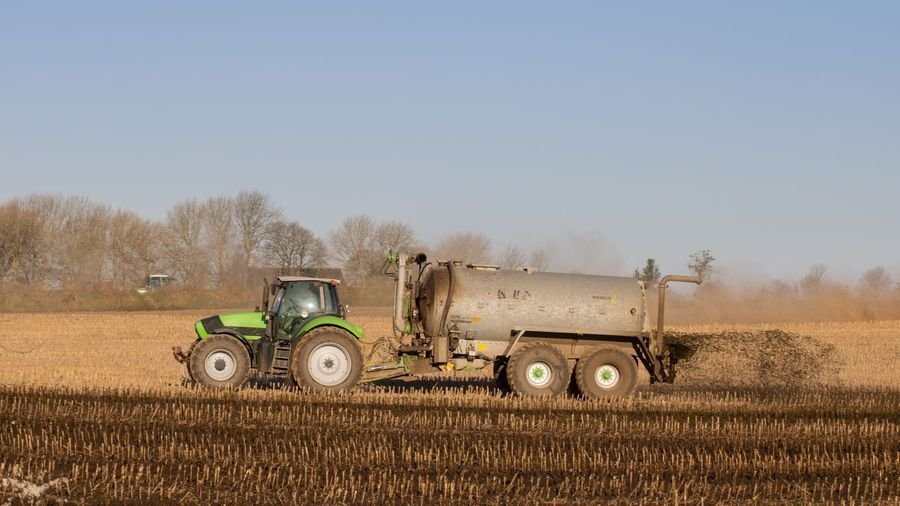
Fertilizers
Urea 46% Nitrogen
The world's most widely used nitrogen fertilizer — the highest nitrogen concentration available in solid form, at the lowest cost per unit of N.
Urea contains 46 per cent nitrogen, more than any other solid fertilizer in common use. That concentration is its central commercial advantage: fewer tonnes to ship, fewer bags to handle and fewer passes across the field for the same nitrogen applied.
It accounts for well over half of global nitrogen fertilizer consumption, and Addam Energy supplies both prilled and granular product in bagged and bulk form.
How urea works in soil
Urea is not directly available to plants. Once applied it is hydrolysed by the soil enzyme urease into ammonium carbonate, which breaks down to ammonium. Soil bacteria then nitrify the ammonium to nitrate over the following weeks. The whole sequence takes anything from two days to two weeks depending on temperature, moisture and soil biology.
That conversion period is why urea responds more slowly than ammonium nitrate in cold soils, and why it behaves as a mildly sustained-release source through the season.
Avoiding volatilisation loss
The main agronomic risk with urea is ammonia volatilisation. If urea sits on the soil surface and hydrolyses there, ammonia can escape to the atmosphere — losses of twenty to forty per cent are possible on hot, dry, high-pH soils with crop residue cover.
The remedies are well established: incorporate by cultivation or irrigate within two or three days of application, apply ahead of forecast rainfall, avoid the hottest part of the day, and on high-risk sites use a urease-inhibitor-treated product. Applied with these precautions, urea performs as well as any other nitrogen source.
Prilled and granular
Prilled urea is formed by dropping molten urea down a tower against a rising air stream, producing small, uniform, spherical particles around 1 to 2.4 mm. It dissolves quickly and suits solution preparation and hand application.
Granular urea is built up in a rotating drum or fluidised bed to a larger 2 to 4 mm particle with greater crush strength. It resists degradation in handling, spreads accurately over wide booms, and is the preferred form for mechanised broadacre farming and for bulk blending with other nutrients.
Non-agricultural uses
- Diesel exhaust fluid (AdBlue / DEF) for selective catalytic reduction on vehicles
- Urea-formaldehyde resins for plywood, particleboard and laminates
- Protein supplement in ruminant animal feed, at controlled inclusion rates
- NOx reduction in power station and industrial flue gas treatment
- Melamine production and a range of chemical intermediates
Typical specification
| Total nitrogen | 46% minimum |
|---|---|
| Biuret content | 1.0% maximum |
| Moisture | 0.5% maximum |
| Prill size | 1.0 – 2.4 mm, 90% minimum |
| Granular size | 2.0 – 4.0 mm, 90% minimum |
| Bulk density | 0.73 – 0.78 t/m³ |
| Colour | White, free-flowing |
| Packing | 50 kg bags · 1 MT jumbo · bulk |
Values are indicative and given for guidance. Contract specification is agreed in writing and certified per batch on the certificate of analysis issued with each shipment.