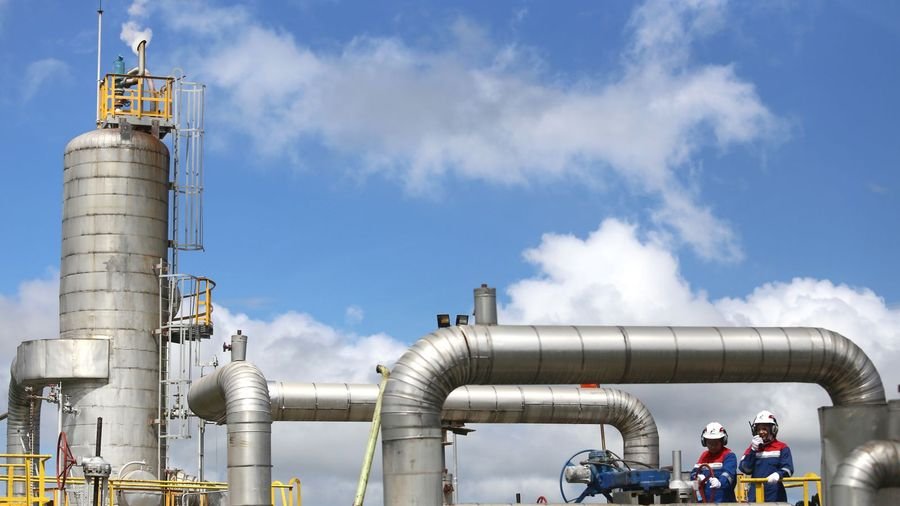
Sulphur
What is Sulphur?
Element sixteen — a bright yellow non-metal recovered from oil and gas processing, and the feedstock behind more industrial chemistry than any other.
Sulphur is a yellow, brittle, non-metallic element that occurs both natively and, far more abundantly, locked into hydrogen sulphide in sour crude oil and natural gas. Almost all the sulphur traded today is recovered from those streams rather than mined, because refineries and gas plants have to remove it to meet fuel specifications.
That makes sulphur an unusual commodity: production is driven by the need to clean hydrocarbons, not by demand for the sulphur itself. Addam Energy places recovered sulphur from regional producers into industrial and agricultural markets worldwide.
Physical character
At ambient temperature sulphur is a pale yellow crystalline solid, insoluble in water and with almost no odour when pure. It melts at 115 °C and boils at 445 °C, and it has an unusual viscosity curve on melting: the liquid thins at first, then thickens dramatically above 160 °C as the ring molecules open and polymerise, before thinning again near the boiling point.
That behaviour matters commercially, because molten sulphur handling systems have to be designed and operated within a narrow temperature band, typically 130 to 150 °C, to stay pumpable.
Where it comes from
- Recovered sulphur from refinery hydrotreating and gas sweetening — the dominant source
- The Claus process, which converts hydrogen sulphide to elemental sulphur at over 95% efficiency
- Native deposits mined by the Frasch process, now a small and declining share
- Pyrite roasting and metal smelter off-gas, mainly captured as sulphuric acid
Why it matters industrially
Around ninety per cent of all sulphur produced goes into sulphuric acid, and the majority of that acid goes into phosphate fertilizer manufacture. Sulphuric acid consumption is often used as a proxy for a country's level of industrial activity, which gives some sense of how foundational the material is.
The remainder supports an extremely wide spread of uses: rubber vulcanisation, pulp and paper, metal leaching, pharmaceuticals, agricultural fungicides, and direct application as a soil nutrient.
Typical specification
| Chemical symbol | S |
|---|---|
| Atomic number | 16 |
| Melting point | 115 °C |
| Boiling point | 445 °C |
| Density | 2.07 g/cm³ |
| Colour | Bright yellow |
| Water solubility | Insoluble |
Values are indicative and given for guidance. Contract specification is agreed in writing and certified per batch on the certificate of analysis issued with each shipment.