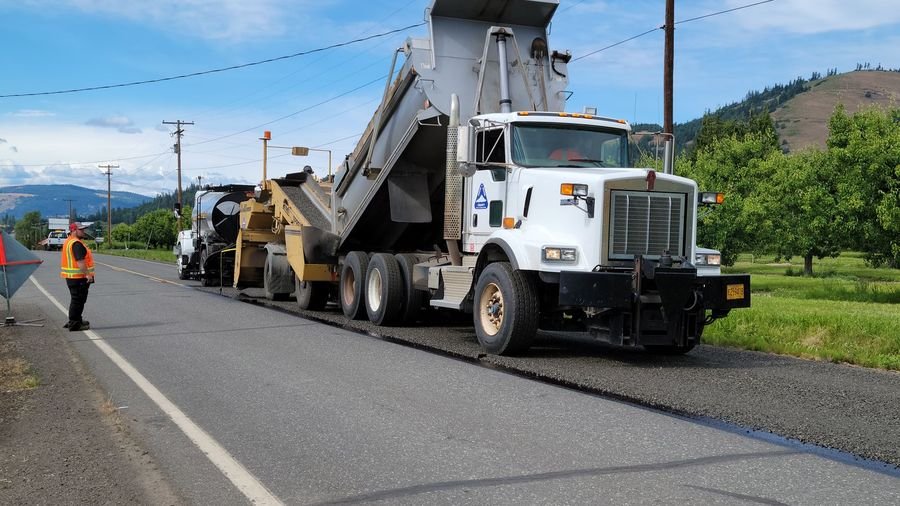
Bitumen
What is Bitumen?
A dense, highly viscous hydrocarbon binder recovered from the heaviest fraction of crude oil — and the material that holds the modern road network together.
Bitumen is the heaviest fraction that remains once crude oil has given up its lighter products. It is a dark, semi-solid hydrocarbon built from very large molecules — asphaltenes suspended in an oily maltene phase — and that structure gives the construction industry the two properties it depends on: it sticks to mineral aggregate, and it stays waterproof for decades.
At room temperature bitumen behaves almost like a solid. Warm it and it flows freely enough to coat stone; let it cool and it locks that stone into a flexible, load-bearing mat. Addam Energy supplies bitumen that reproduces this behaviour batch after batch, because the performance of a pavement is decided long before the paver arrives on site.
Where bitumen comes from
Almost all commercial bitumen is refinery-produced. Crude oil is distilled at atmospheric pressure to remove naphtha, kerosene and gasoil, and the residue is distilled a second time under vacuum so the remaining heavy fraction can be separated without thermal cracking. What leaves the bottom of the vacuum column is straight-run bitumen.
A smaller volume occurs naturally, in lake deposits and rock asphalt, where crude has migrated to the surface and lost its volatile fractions over geological time. Gilsonite is the best known of these natural bitumens and is still used as a hardening modifier.
What makes it different from tar
Bitumen and coal tar are routinely confused, and they are not the same material. Bitumen is petroleum-derived and consists of high molecular weight aliphatic and aromatic hydrocarbons. Coal tar is a by-product of coal carbonisation, is far more aromatic, and carries a health profile that has removed it from most road applications.
In American usage the finished road mixture is called asphalt and the binder itself asphalt cement, while across Europe and the Middle East the binder is called bitumen and asphalt refers to the mix. Addam follows the international convention: bitumen is the binder we supply.
The properties that matter commercially
- Adhesion — bonds to mineral aggregate and holds under repeated traffic loading
- Waterproofing — effectively impermeable, which is why it is used on roofs and foundations
- Viscoelasticity — flexes under slow loading, resists deformation under fast loading
- Thermoplasticity — softens on heating and recovers on cooling without chemical change
- Durability — resistant to most acids, alkalis and salts encountered in service
- Recyclability — reclaimed asphalt pavement can be reheated and returned to the mix
Typical specification
| Physical state at 25 °C | Semi-solid to solid |
|---|---|
| Typical density | 1.01 – 1.06 g/cm³ |
| Softening point range | 35 – 160 °C by grade |
| Solubility | 99%+ in trichloroethylene / toluene |
| Handling temperature | 140 – 180 °C for paving grades |
Values are indicative and given for guidance. Contract specification is agreed in writing and certified per batch on the certificate of analysis issued with each shipment.